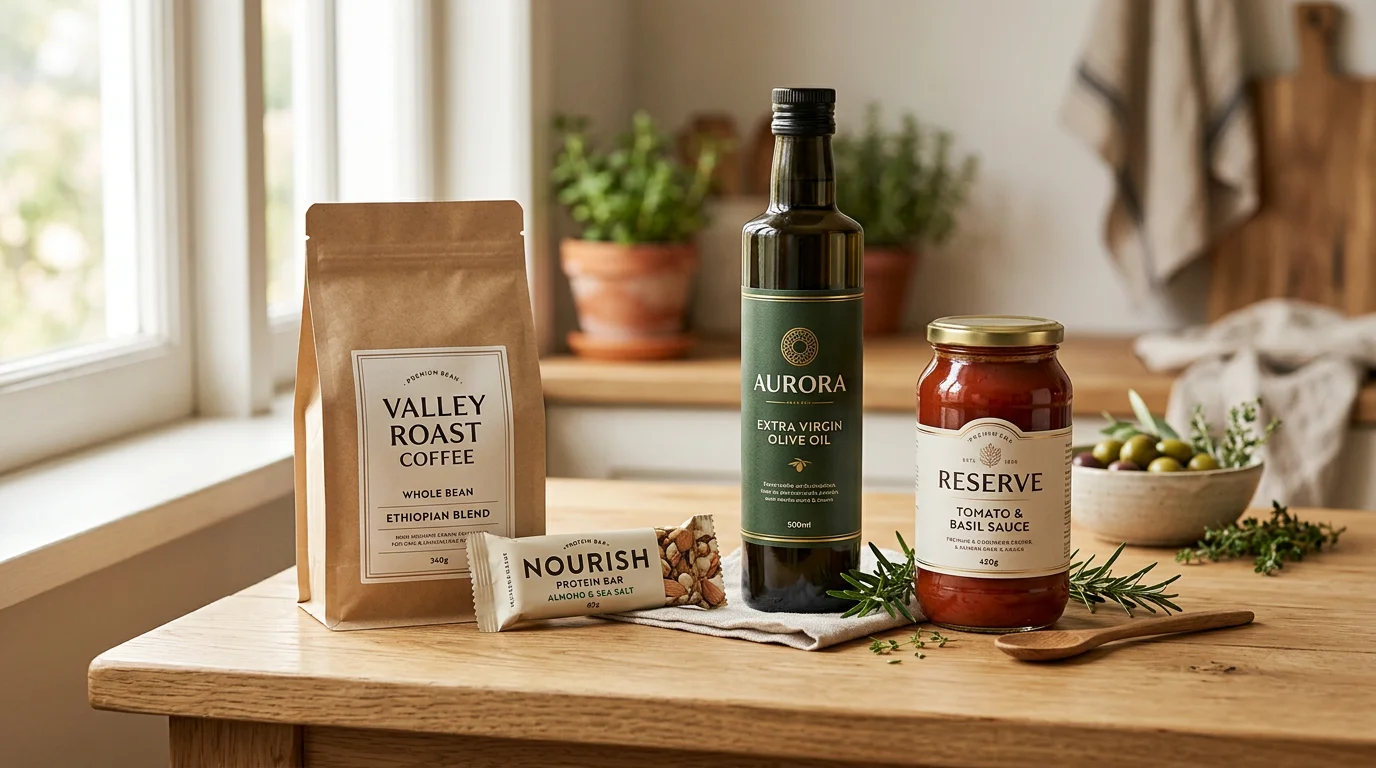
Food photography is one of the most expensive categories in product photography. A professional food stylist costs $400–$1,000 per day. A food photographer charges another $500–$1,500. Add studio rental, props, ingredients for multiple takes, and post-processing—and a single day of food photography easily runs $2,000–$4,000, producing 15–30 final images.
For a packaged goods brand launching a new product line, or a restaurant updating its menu photography, that cost repeats every time you update a product or launch a seasonal variant. AI food product photography offers a different model: upload your packaging photo, describe the scene you want, and receive studio-quality food imagery in under a minute.
Types of food product photography
Not all food photography serves the same purpose. The type you need depends on where the image will appear:
Packaged product photography
The most common category for brands: showing the packaging (bottle, bag, box, jar) against a clean background or in a styled scene. This is what appears on Amazon listings, grocery store websites, and DTC brand pages. The product is the hero; food styling is secondary.
Prepared food photography
Showing the food itself—a dish plated and styled, a sauce poured over pasta, a smoothie in a glass. This category requires food stylists and is most common for restaurants, recipe blogs, and food brands that want to show the end result.
Lifestyle food photography
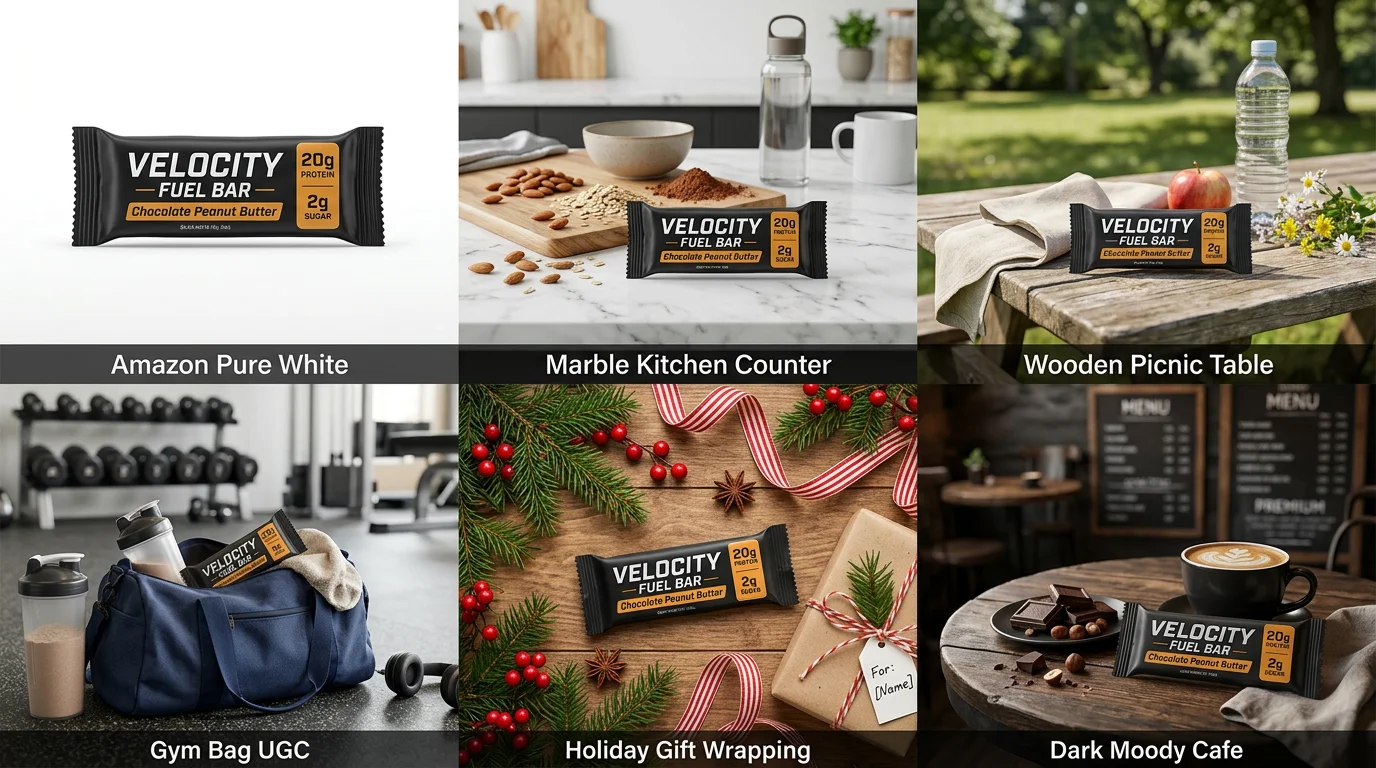
The product placed in a lifestyle context: a protein bar next to workout equipment, a coffee bag on a kitchen countertop, a hot sauce bottle on a taco Tuesday setup. These images perform best on Instagram and in paid ads.
UGC-style food photography
Authentic-looking, slightly imperfect photos that look like they were taken by a real customer. These outperform polished studio photography in Meta and TikTok ads—lower production value signals authenticity and drives better click-through rates.
AI vs. traditional food photography: real numbers
| Factor | Traditional Studio | FlowPic AI |
|---|---|---|
| Day rate (photographer + stylist) | $1,500–$4,000/day | Subscription from $19/month |
| Images per day | 15–30 final images | Unlimited |
| Turnaround | 1–2 weeks (editing) | 60 seconds |
| Background/scene changes | New shooting day required | Instant regeneration |
| Seasonal variants | $2,000+ per shoot | Included |
| Video ad creation | Separate videographer required | Image-to-video included |
| Cost for 5 products × 5 scenes | $5,000–$15,000 | $15–$50 |
Who benefits most from AI food photography
Packaged goods brands launching on Amazon
You need 7–9 images per ASIN: main listing image (white background), lifestyle context shots, infographic overlays showing nutrition information, and comparison shots. With dozens of SKUs, traditional photography becomes prohibitively expensive. AI generates all of these from your packaging image.
DTC food and beverage brands
Direct-to-consumer brands need high-volume imagery: product pages, email campaigns, Meta ads, TikTok content, Instagram grids. The volume required makes weekly agency shoots unsustainable. AI photography lets you generate on-demand for every campaign and every channel.
Restaurants and ghost kitchens
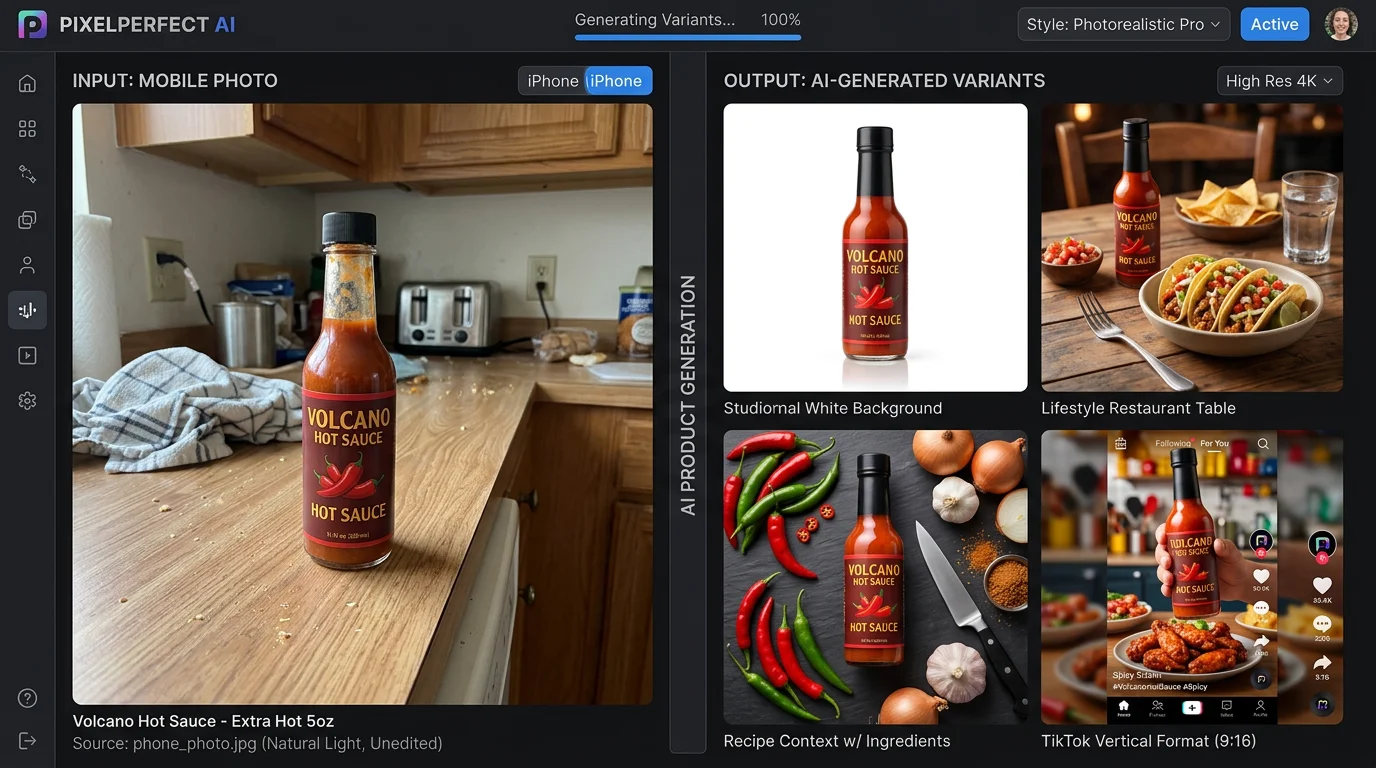
Updating a full menu at a traditional photo studio costs $3,000–$8,000. With AI, photograph your dishes once on your own (even with a phone), and generate polished versions for your menu, delivery apps (Uber Eats, DoorDash), and Google Business Profile.
Food product startups pre-launch
You need website imagery and social content before you have inventory or a photography budget. AI generates product photos from packaging mockups—real photos of your product aren't required.
How to generate food product photos with AI
The FlowPic workflow for food photography:
-
Upload your product photo
For packaged goods: photograph the front of your packaging on a neutral background. Phone camera quality is fine. For prepared food: take a real photo of the dish (lighting and angle matter more here). -
Select your output scene
Choose from: clean white background (Amazon-ready), lifestyle scene (kitchen counter, picnic table, restaurant table), UGC-style (casual, authentic feel), or promotional (with space for text overlay). -
Choose your platform format
Amazon: 2,000 × 2,000px square. Shopify: 2,048 × 2,048px. Instagram: 1,080 × 1,080px (square) or 1,080 × 1,350px (portrait). TikTok/Meta ads: 1,080 × 1,920px (vertical). -
Generate and download
Your images arrive in under 60 seconds. For video ads, use the image-to-video option to generate a 3–6 second product reveal clip—these run directly in Meta and TikTok ad campaigns.
Platform specifications for food photography
Amazon food photography requirements
- Main image: white background, product fills 85% of frame, no text or props
- Resolution: 1,000 × 1,000px minimum; 2,000 × 2,000px recommended for zoom
- Alternate images: lifestyle and infographic overlays are encouraged
- A+ Content: additional branded images for enhanced brand pages (requires Brand Registry)
Instacart and grocery delivery platforms
- Pure white or transparent background, packaging centered
- Minimum 200 × 200px; 1,200 × 1,200px preferred
- Front-of-pack must be clearly readable
Shopify and DTC store
- 2,048 × 2,048px recommended for grid and zoom compatibility
- Mix of clean product, lifestyle, and ingredient/flavor shots for collections pages
Meta and TikTok ads
- Square (1:1): 1,080 × 1,080px — best for Instagram feed ads
- Vertical (9:16): 1,080 × 1,920px — best for Stories and TikTok
- Video: 6–15 seconds performs best in feed; 3–6 seconds for Stories
Tips for best AI food photo results
- Photograph the package against a white or light gray background: This makes background removal cleaner and gives AI the most accurate color data for your packaging.
- Include multiple angles in your upload session: Front-of-pack, side panel, and top-down. Different angles work better for different scenes.
- Generate 5+ scene variants per product: What works on Amazon (clean) differs from what works on Instagram (lifestyle) and TikTok (UGC). Generate all three formats and test.
- Use seasonal lifestyle scenes proactively: Generate holiday variants (Christmas, summer BBQ, back-to-school) 6–8 weeks before the season—don't pay for a seasonal photo shoot.
- Always generate a video ad version: Meta's algorithm de-prioritizes static images in feeds. A 3-second product reveal video generated from your same product image outperforms static in 80% of split tests.
Frequently asked questions
Can AI generate appetizing photos of prepared food (not just packaging)?
FlowPic works best for packaged food products. For prepared food (dishes, drinks, plated meals), the source photo quality matters more—start with a decent photo of the prepared dish, and AI can enhance backgrounds, lighting, and styling. For packaged goods, phone-quality source photos produce excellent results.
Do I need to photograph my food products before using AI?
For existing products, yes—you need at least one real photo of your packaging. For pre-launch products, you can use packaging mockups or renders as the source image. Some brands generate AI product photos before their physical product exists, using label designs applied to stock bottle/box templates.
Will Amazon accept AI-generated product photos?
Amazon's current policies permit AI-assisted product imagery as long as the product shown is an accurate representation of what's being sold. AI-generated lifestyle scenes and background replacements are widely used by Amazon sellers. Always ensure your listing images accurately represent the product—misleading imagery violates Amazon's terms regardless of how it was created.
How do I generate seasonal variants without a photo shoot?
In FlowPic, select a seasonal lifestyle scene (e.g., "Christmas morning kitchen" or "Summer barbecue table") when generating your images. Your product packaging is placed into the AI-generated scene automatically. This takes under a minute per variant.
What's the best way to create food product videos for TikTok?
Use FlowPic's image-to-video feature after generating your product images. The product reveal format (product fades in against a lifestyle scene, with optional text overlay) performs well in TikTok and Meta placements. No video editing skills required.
Ready to generate professional food product photos?
Upload your packaging and generate Amazon-ready images in 60 seconds.
Try FlowPic Free →