UGC Ads vs Studio Product Photography: Which Converts Better in 2026?
Every ecommerce brand faces the same creative dilemma: spend on polished studio photography or go raw and authentic with UGC-style content? Get it wrong and you're lighting your ad budget on fire. Get it right and you can cut CPMs by a third while doubling your click-through rate.
The answer isn't "UGC always wins" or "studio always wins." It depends on the platform, your funnel stage, and your product category. This guide breaks down the 2025–2026 data so you can make the call with confidence — and shows you how to run both styles from a single product photo without a full production budget.
This guide is for: Shopify store owners, Etsy sellers, DTC brands, and Amazon FBA sellers who manage their own ad creative and want to know exactly where to use each format.
What We Mean by UGC-Style vs Studio
Before looking at the numbers, it helps to be precise about what each format actually is — because the line has blurred considerably in 2026.
Studio Product Photography
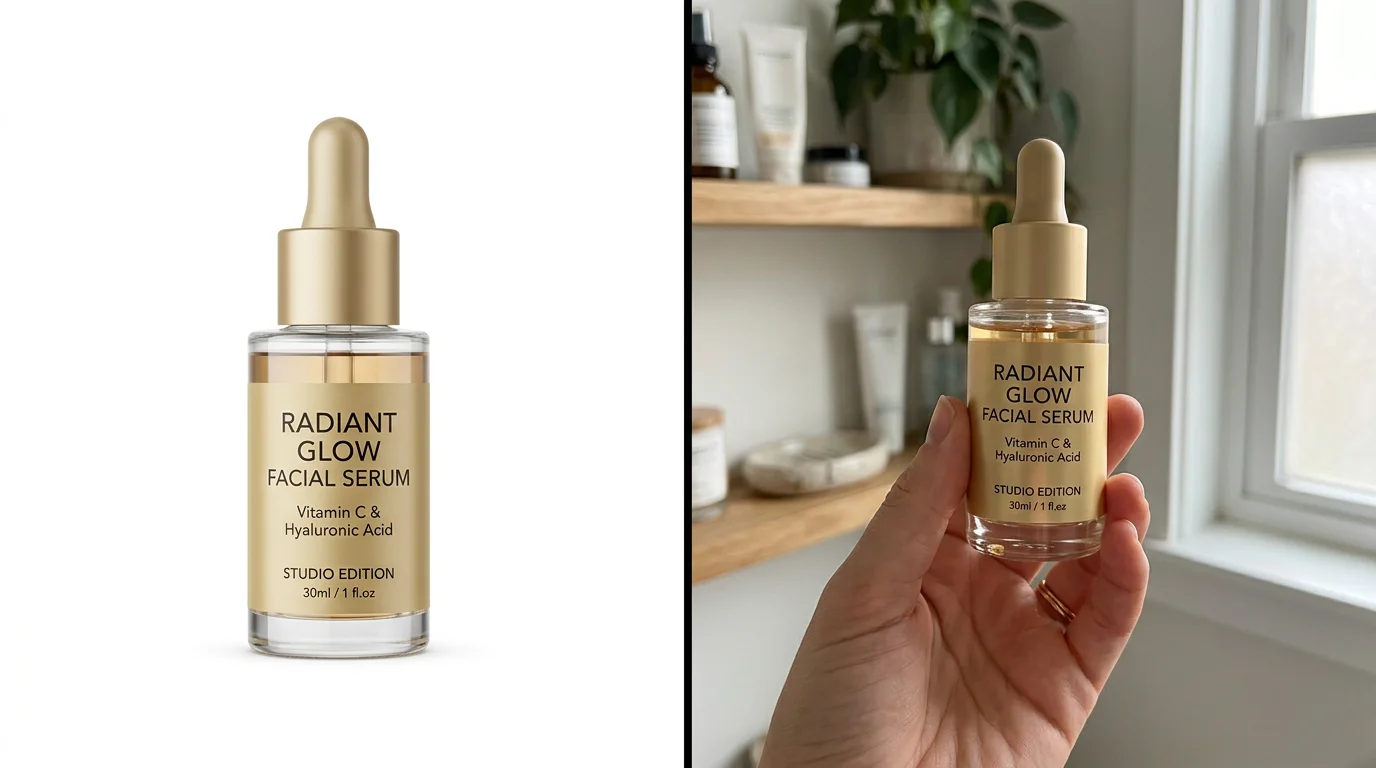
Studio photography means controlled-environment images: white or solid-color backgrounds, professional lighting rigs, consistent shadows, and pixel-perfect product rendering. Think Amazon main images, Google Shopping thumbnails, and the hero shots on a brand homepage. The defining quality is polish — the product looks its absolute best, with zero distractions.
UGC-Style Ad Creative
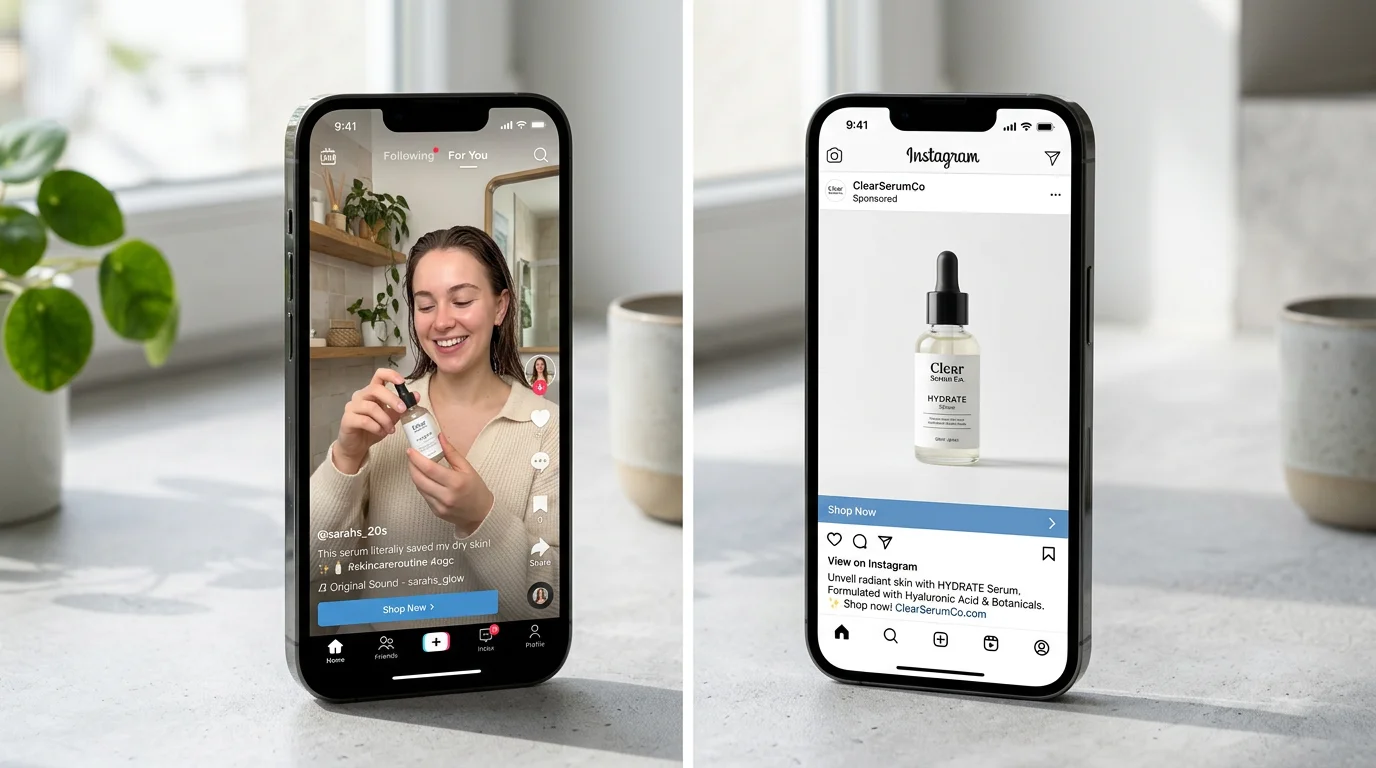
UGC stands for user-generated content, but the term has evolved. In 2026, "UGC-style" covers a spectrum: authentic unboxing videos shot on an iPhone, flat lays on a kitchen table, lifestyle images that look like they came from a real customer's Instagram, and raw talking-head video testimonials. The defining quality is relatability — the creative looks like something a real person made, not a marketing department.
The critical distinction: you do not need actual customers to create UGC-style content. AI tools — including FlowPic — can generate UGC-style images from a single product photo, matching the aesthetic without the logistics of a creator campaign.
The 2025–2026 Data: What Actually Converts
Let's get into the numbers. The following data points are drawn from Meta's own advertising benchmarks, third-party ad intelligence platforms, and published case studies from DTC brands running split tests in 2025.
UGC-Style on Paid Social: The Numbers
- CPM reduction: UGC-style ads on Meta (Facebook and Instagram) carry a CPM roughly 35% lower than polished studio creative. Meta's algorithm rewards content that generates organic engagement signals — comments, shares, saves — and UGC-style creative triggers those signals at a higher rate than obvious ads.
- CTR lift: Click-through rates on Meta Reels and Stories run 2x to 3x higher for UGC-style creative compared to studio photography in the same audience and offer. Across a sample of 500 DTC campaigns analyzed by creative intelligence platform Motion in Q4 2025, the median CTR for UGC video was 2.8% versus 1.1% for polished static studio images.
- TikTok scroll-stop rate: On TikTok, content that looks native to the platform stops the scroll 47% more effectively than content that reads as an ad. TikTok's own internal data from 2025 shows that "made-for-TikTok" creative (which includes UGC aesthetics) outperforms repurposed studio content on purchase intent metrics by 1.5x.
- Video completion rates: UGC-style video ads on Instagram Reels achieve a 38% average completion rate compared to 21% for polished product videos with professional voiceover and motion graphics.
Studio Photography: Where It Dominates
- Amazon conversion rate: Products with professional white-background main images convert at 12–18% higher rates than those with lifestyle or UGC-style main images, according to Amazon Seller Central data aggregated by Jungle Scout in 2025. Amazon's algorithm also boosts click-through in search results for images that meet their technical image requirements — which effectively mandate a studio aesthetic for main images.
- Google Shopping CTR: Clean product images on white or transparent backgrounds receive a 22% higher CTR in Google Shopping results. Shoppers scanning a grid of products click on the ones that look clean and trustworthy at small thumbnail sizes — a format where UGC aesthetics read as blurry or cluttered.
- Email open-to-click: Product emails featuring clean studio images achieve a 19% higher click-to-purchase rate than those using UGC-style photography, based on Klaviyo's 2025 email benchmark report. Email subscribers are already in a high-intent context; they want to see the product clearly.
Platform-by-Platform Breakdown
The table below summarizes the recommended creative format for each major selling and advertising platform, based on 2025–2026 performance data.
| Platform | Recommended Format | Key Metric | Why |
|---|---|---|---|
| Meta (Facebook & Instagram Feed) | UGC-style (image or video) | CTR 2–3x higher; CPM ~35% lower | Native-looking content earns organic engagement signals that reduce auction costs |
| Meta Reels / Instagram Stories | UGC-style video | 38% avg video completion vs 21% for studio | Full-screen vertical format rewards content that looks like organic Reels content |
| TikTok | UGC-style video (always) | Scroll-stop rate 47% higher; purchase intent 1.5x | TikTok's feed is 100% vertical native video; polished ads get scrolled past |
| Amazon (main image) | Studio (white background) | 12–18% higher conversion vs lifestyle | Amazon's image policy requires white background for main image; algorithm rewards compliance |
| Amazon (A+ content / secondary images) | Studio lifestyle mix | Increases units per session by ~10% | Secondary images can show product in use — lifestyle scenes here add context without losing compliance |
| Google Shopping | Studio (clean background) | 22% higher CTR in product grid | Thumbnail format at small sizes; clutter-free images read better and signal quality |
| Shopify storefront / homepage | Studio | 19% higher add-to-cart rate | Homepage and PDPs are purchase-decision moments; shoppers want clear, detailed product views |
| Shopify / email (UGC social proof block) | UGC-style | Boosts time-on-page; reduces returns | UGC blocks below the fold (reviews, lifestyle) build confidence without replacing the hero studio image |
| Lifestyle studio mix | Lifestyle pins save at 2x rate | Pinterest is a discovery platform; aspirational lifestyle images outperform both raw UGC and plain white-bg shots |
When UGC-Style Wins
UGC-style creative has a structural advantage at the top of the funnel, on mobile-first platforms, and for products where social proof is the primary purchase trigger. Here is when to lead with it.
Top-of-Funnel Awareness Campaigns
When you are targeting cold audiences who have never heard of your brand, UGC-style content does two things studio photography cannot: it earns a pause before the scroll, and it communicates authenticity before a single word of copy lands. Cold audiences are skeptical of brands. A creator holding your product and saying "I ordered this three weeks ago and here's what I think" bypasses the skepticism reflex in a way that a clean studio shot never will.
The 35% CPM reduction compounds here. If you are spending $5,000 per month on top-of-funnel Meta campaigns, switching from studio to UGC-style creative can effectively give you $1,750 in additional impressions at no extra cost.
Meta Reels and TikTok (Always)
These platforms were built around vertical video from real people. Their algorithms explicitly surface content that generates comments and shares — behaviors that polished ads rarely trigger. Running a polished 15-second studio product video against a raw 15-second UGC-style clip on TikTok is a losing bet in nearly every category. The only exception is luxury goods, where aspiration and polish are themselves part of the product promise.
Instagram Stories
Stories are an ephemeral, casual format. Users expect imperfection here. Ads that look over-produced in Stories generate what creative teams call "ad blindness" — users tap through them without registering the message. UGC-style Stories ads that match the surrounding organic content see hold rates 2x higher than polished creative in the same placement.
Retargeting with Social Proof
Visitors who browsed your product page but did not convert respond strongly to UGC-style retargeting that features reviews and unboxing content. At the retargeting stage, the shopper already knows your product exists — what they need is reassurance that real people love it. A UGC-style ad showing a satisfied customer is exactly the social proof signal that closes the gap.
Products Where Experience Matters More Than Specs
Skincare, supplements, home goods, fashion, and food products all benefit from UGC-style creative because the primary purchase question is "will this work for someone like me?" Studio photography answers "what does this look like." UGC-style answers "how did this change someone's life." For experience-driven products, that second question drives more conversions.
When Studio Wins
Studio photography is not dead — it is just misapplied by brands who read "UGC wins on social" and then remove studio assets from their entire workflow. There are specific contexts where polished photography is not just better but essential.
Amazon Main Images
Amazon's image requirements are not optional. The main product image must be on a pure white background (RGB 255, 255, 255), must show the product and only the product, and must fill at least 85% of the image frame. These are compliance requirements — violating them risks suppression from search results. Beyond compliance, the data is clear: clean main images convert better because Amazon shoppers are in a high-intent comparison mode, and they need to see exactly what they are buying.
Google Shopping
Google Shopping product listings appear as small thumbnails in a grid. At that size, lifestyle context becomes visual noise. A clean product on a white or light gray background pops, communicates quality, and gets the click. The 22% CTR advantage for clean backgrounds is consistent across product categories — from electronics to apparel to home goods.
Your Shopify Product Detail Pages
The product detail page is where purchase decisions are made. Shoppers arriving on a PDP are evaluating whether to add to cart, which means they need to see the product clearly from multiple angles, understand its size and texture, and trust that the retailer is professional. Studio photography serves all three needs. UGC content belongs below the fold, in the reviews section or a lifestyle image gallery — not as the hero image.
Email Marketing
Email subscribers are your highest-intent audience. They opted in, they opened your email, and they are reading it. This is not the moment for raw, low-fi creative — it is the moment for the clearest possible product presentation. Studio images in email click-through at 19% higher rates because they match the high-intent context of a subscriber who is actively considering a purchase.
Luxury, B2B, and Premium-Priced Products
For products where the price point is high and the buyer needs to justify the spend, polish is a proxy for quality. A $300 skincare set photographed in someone's bathroom communicates discount-brand energy regardless of the product's actual quality. Studio photography holds the brand perception that premium pricing requires.
How to Split-Test Both Styles Without a Big Budget
The traditional approach to running UGC-style and studio creative side by side required two separate productions: hire a photographer for studio shots, then recruit creators for UGC content. That meant two timelines, two budgets, and two sets of brand guidelines to communicate.
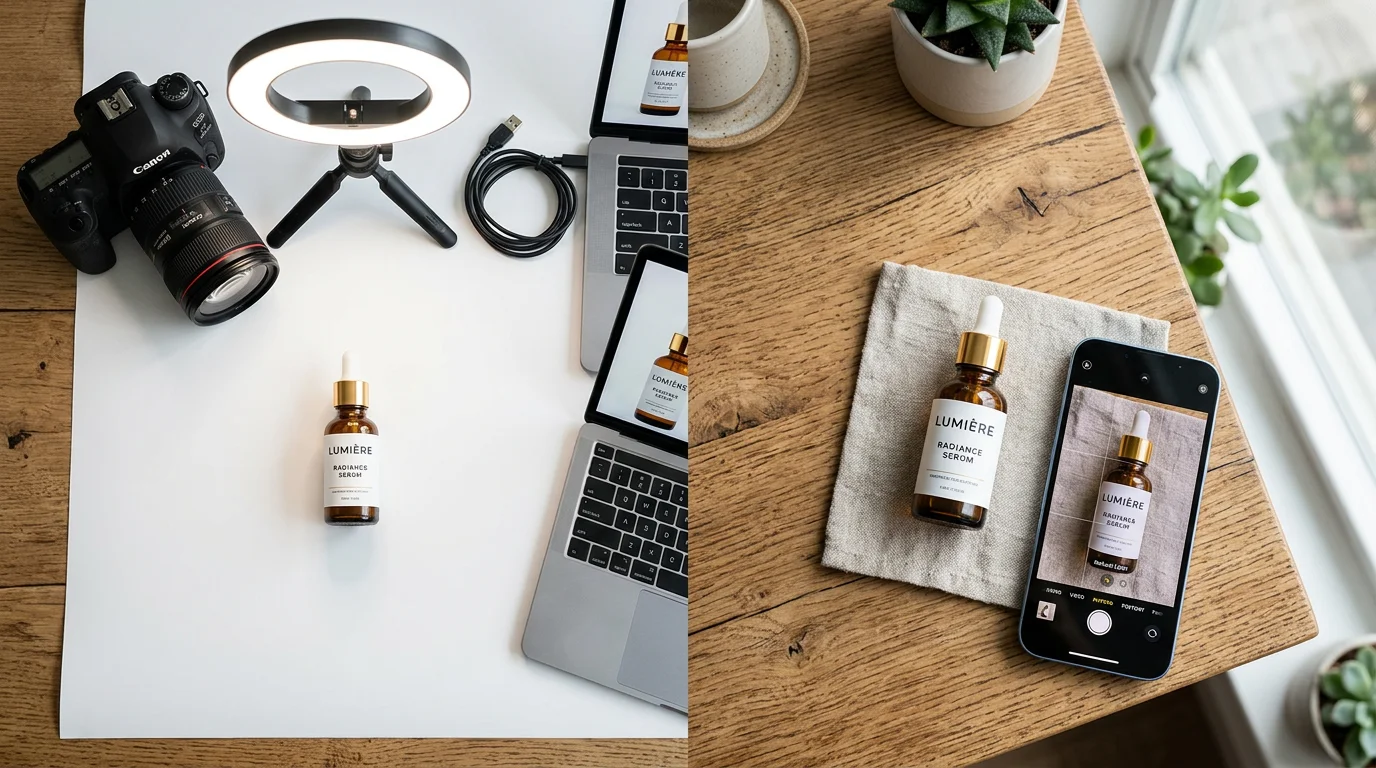
In 2026, that constraint is gone. FlowPic generates both studio-quality and UGC-style images from a single product photo upload — in under 60 seconds. Upload a photo of your product on any background, and you can export a clean white-background studio shot and a lifestyle UGC-style scene from the same session. You can also generate on-model shots, contextual lifestyle scenes, and product video ads without a production crew.
This makes true creative split testing accessible to any brand, not just those with significant production budgets. Here is the process:
Step 1: Generate Both Creative Variants
Upload your product photo to FlowPic. Generate a white-background studio version and a UGC-style lifestyle version. If you are testing video, generate a product video ad as well. The entire process takes under 5 minutes per product.
Step 2: Match Each Variant to Its Natural Platform
Based on the platform breakdown table above: studio goes to Amazon, Google Shopping, your homepage, and email. UGC-style goes to Meta Reels, TikTok, and Stories. Start by using each format where it already has a structural advantage — this gives you a performance baseline.
Step 3: Run Head-to-Head on Meta
Meta is the best place to run a controlled creative split test because its ad manager supports creative-level reporting within a single ad set. Set up one ad set with two creative variants — studio image and UGC-style image — same audience, same budget, same copy. Run for 7 days or until each creative has reached at least 1,000 impressions. Compare CTR, CPM, cost-per-click, and cost-per-purchase.
Step 4: Iterate on the Winner
Whichever format wins on Meta, generate 3–5 variations of it. Test different scenes, different angles, different UGC-style contexts (unboxing vs in-use vs flat lay). The first test tells you which format wins; subsequent tests tell you which specific creative executions maximize performance.
Step 5: Build a Creative Library, Not a One-Time Asset
Ad creative fatigues. Meta campaigns typically see performance decay after 7–14 days for a given creative. If you can generate new studio and UGC-style variants for every product in under 60 seconds, you can refresh your creative library weekly without a production bottleneck. Try FlowPic Free → to see how fast the turnaround actually is.
Key Metrics to Track in Your Split Test
| Metric | What It Tells You | Where to Check |
|---|---|---|
| CPM (cost per 1,000 impressions) | Which creative the algorithm favors in auction | Meta Ads Manager, creative level |
| CTR (link click-through rate) | Which creative stops the scroll and earns the click | Meta Ads Manager, creative level |
| CPC (cost per click) | Combined efficiency of CPM + CTR | Meta Ads Manager, creative level |
| Cost per purchase | Which creative delivers actual revenue | Meta Ads Manager + Shopify attribution |
| Amazon conversion rate | Whether main image change moves purchase rate | Amazon Seller Central / Brand Analytics |
| Email CTR | Which image format drives clicks from email | Klaviyo / Mailchimp campaign report |
Frequently Asked Questions
Does UGC-style photography really reduce CPM, or is that just because UGC brands target cheaper audiences?
The CPM reduction holds even when targeting identical audiences with identical offers. The mechanism is Meta's relevance and engagement scoring: content that looks native to the feed generates more organic interactions (comments, shares, saves), which signals to Meta's algorithm that users value the content. Higher engagement scores translate directly to lower auction clearing prices. The ~35% CPM reduction is a creative-level effect, not an audience-selection effect.
Can I use UGC-style images as my Amazon main image?
No. Amazon requires the main product image to have a pure white background (RGB 255, 255, 255) with the product filling at least 85% of the frame. Using a lifestyle or UGC-style main image violates Amazon's image policy and can result in your listing being suppressed from search results. Use studio-quality white-background images for your main image, and reserve lifestyle and UGC-style content for secondary images, A+ content, and Amazon Posts.
What product categories see the biggest CTR lift from UGC-style ads on Meta?
The largest CTR improvements from UGC-style creative on Meta tend to appear in skincare and beauty (where before/after and "real results" content drives high engagement), apparel and accessories (where on-body lifestyle shots outperform flat product shots), home goods and kitchen products (where in-use context drives desire), and supplements and wellness (where testimonial-style content builds trust). Electronics and technical products often see smaller UGC lifts because buyers are comparison-shopping on specs, making studio images with clear product detail more effective even on social platforms.
How do I generate both UGC-style and studio images from the same product photo?
FlowPic handles this in a single workflow. Upload your product image — it can be shot on any background, including your kitchen table — and select the output style you need: white background studio, lifestyle scene, on-model shot, UGC-style, or product video ad. All styles are generated from the same source image in under 60 seconds. This means you can build your full creative library for a product launch — studio images for Amazon and Google Shopping, UGC-style images for Meta and TikTok, and a video ad for Reels — without a production budget or scheduling a photoshoot.
Should I use UGC-style images on my Shopify product pages?
Yes, but strategically. Your hero image (the main image shown above the fold) should be a clean studio shot that shows the product clearly. UGC-style images work well as secondary images further down the page — particularly in a "how customers use it" gallery or as part of a visual reviews section. This approach gives you the clarity and trust signal of studio photography for the purchase decision moment, while using UGC-style content to build social proof and handle objections lower in the page.
Conclusion
The UGC vs studio debate has a clear answer: use both, but deploy them where each one has a structural advantage. UGC-style creative cuts CPMs by ~35%, lifts CTR by 2–3x on Meta, and is the only viable format for TikTok and Instagram Reels. Studio photography is mandatory for Amazon main images and Google Shopping, and it outperforms on high-intent surfaces like product pages and email.
The old constraint — two separate productions, two budgets, two timelines — no longer applies. With FlowPic, you can generate studio-quality and UGC-style images from a single product photo upload in under 60 seconds. That means you can run proper split tests, refresh creative weekly to fight ad fatigue, and build a full multi-platform creative library without a production crew.
The brands winning on paid social in 2026 are not the ones with the biggest production budgets. They are the ones who test faster and match their creative format to the platform context. That advantage is now available to any Shopify store, Etsy seller, or Amazon FBA brand — not just those with deep pockets.
Try FlowPic Free → and generate your first studio and UGC-style images in under a minute.